2026-10-15 15:34:21
In semiconductor testing, “run read/write during burn-in” leaves several questions open. DRAM, raw NAND and eMMC need different device access, operating sequences and result interpretation. For a SANWOOD memory burn-in testing project, those requirements define the electrical functions needed alongside the environmental test chamber.
This guide covers packaged memory integrated circuits (ICs). It connects the selected device and test objective to the burn-in board (BIB), electrical resources, thermal load and quotation scope.
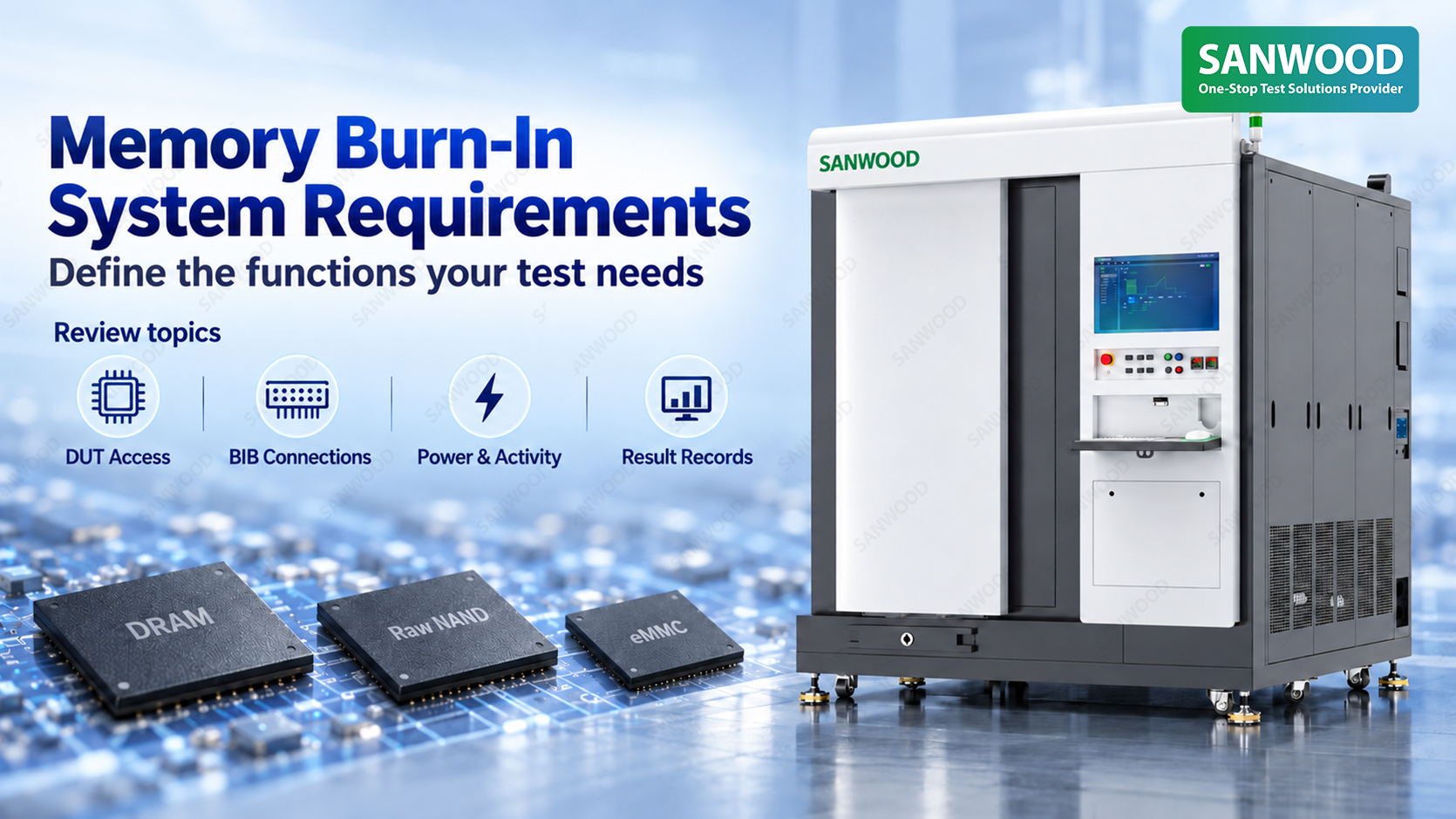
Production memory burn-in screens for early-life failures under specified thermal and electrical stress. The program and acceptance checks determine which device behavior is evaluated. Qualification, endurance and data-retention projects have their own objectives and procedures; identify those explicitly when they form part of the inquiry.
Raw NAND is distinguished here from managed eMMC, which combines NAND flash and a controller. Use the following matrix to define requirements for the selected part and proposed configuration.
| Memory type | Operation to define | BIB and electrical requirements | Results to request |
| DRAM | Read/write patterns, command timing and refresh handling for the selected mode. | Socket and pin compatibility; interface signals and power resources. | Data comparisons or other response checks required by the program. |
| Raw NAND | Read, program and erase sequence; defined error correction code (ECC) arrangement. | Device interface and power; responsibility for ECC and management functions. | Operation status, compared data and correction information where available. |
| eMMC | Host commands, operating states and data patterns. | Host interface, selected package and required power supplies. | Host responses, data comparisons and documented diagnostics if required. |
For raw NAND, the device documentation determines the required ECC support. Where on-die ECC is present, identify the management functions that remain external. With eMMC, the controller manages the media and ECC internally. Successful host read/write operations alone do not expose internal flash translation layer (FTL) state or raw NAND error statistics; additional diagnostics need a documented access method.
A BIB provides the physical and electrical connection to the devices under test (DUTs). Review the package, socket, pin mapping, connectors and any active board circuitry against the selected device and operating conditions.
For a SANWOOD BIB Memory Burn-in Test System inquiry, ask what the quoted “channel” represents: a signal resource, power supply, DUT site or shared group. Confirm which devices can operate simultaneously, which settings are shared and how each DUT’s results are identified. Available socket positions alone do not establish independent electrical operation.
Include the required supply rails, operating current and any sequencing, current-limiting or fault-handling requirements. The proposal should identify which functions are provided by the BIB, system electronics or external equipment.
Static burn-in generally applies defined electrical bias without a changing functional pattern. Dynamic burn-in applies changing signals or an operating sequence. These labels do not specify whether responses are compared with expected values, when checks occur or how failures are recorded. State those requirements separately.
Consider a simplified eMMC example. One sequence records that a write completed. Another writes a defined pattern, reads it back and compares the returned bytes. Both may report “PASS” against their own criteria, but they establish different results.
For semiconductor reliability testing, a useful sample report ties the DUT and board position to the operating step, checked response, program version and acceptance criterion. Clarify whether results are checked during exposure, at selected intervals or before and after the run.
The environmental test chamber assessment needs the populated BIB layout, simultaneous device activity and available heat-load information. Board spacing, sockets and cabling affect the airflow path. Request temperature-uniformity evidence for the intended arrangement, with the temperature reference and measurement locations identified.
Chamber-air measurements do not, by themselves, establish device case or junction temperature. SANWOOD's BIB heat load and airflow guide covers the thermal sizing questions in more detail. Keep the thermal records traceable to the same operating configuration as the electrical results.
An inquiry should show how the chamber, BIBs, power, stimulus, response checks and software will work together. Where external automatic test equipment (ATE) or a host system is involved, define its role and interfaces. Ask the quotation to identify the supplier of each function and the agreed verification scope.
To discuss SANWOOD's Memory Burn-in Test Systems, share the DUT part number and package, test objective and applicable procedure, temperature profile, operating sequence, planned quantity, heat-load information and required result fields. Include existing boards or instruments and identify unresolved inputs so the proposed configuration can address them.
Sanwood is not just a company; it is a commitment to delivering high-quality products that stand the test of time.

 English
 中 文


 info@sanwood.com