2026-10-14 17:55:14
An IC package may still be warming when the chamber controller starts its high-temperature hold. In a temperature cycling test for ICs, that delay affects the exposure the sample receives and the time needed in the chamber program.
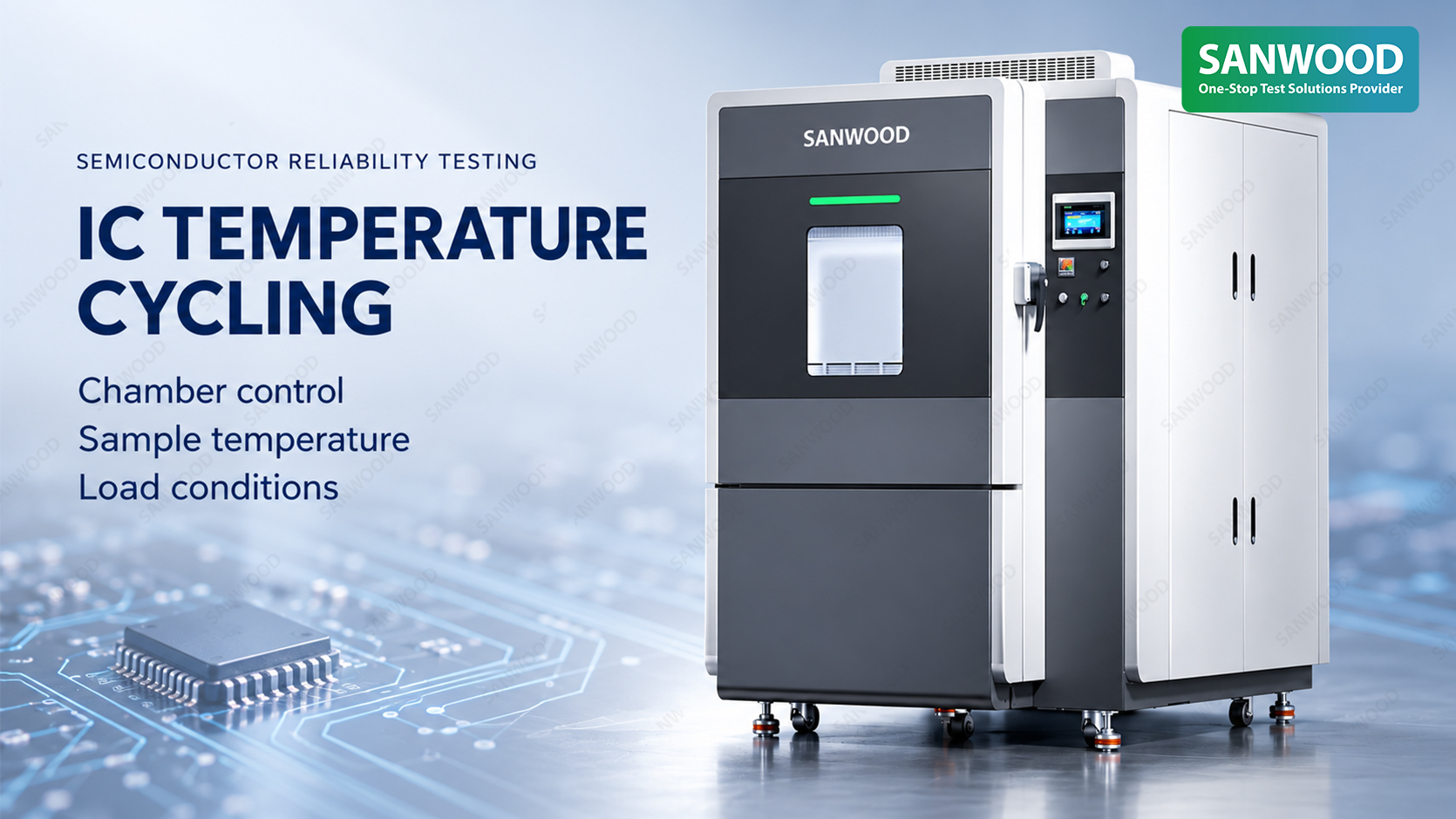
JESD22-A104 uses repeated high and low temperatures to assess the ability of components and solder interconnections to withstand the resulting mechanical stresses. For semiconductor reliability testing, the chamber recipe must account for how the packages respond during both temperature transitions and soak periods.
The SANWOOD Rapid-Rate Temperature Change Chamber supports programmed heating, cooling and constant-temperature stages. Selecting this environmental test chamber involves matching those stages to the required sample profile and the intended package and fixture arrangement.
Start with the JESD22-A104 revision, test condition, soak mode and cycle count specified in the approved test plan. Together, these define the exposure to reproduce. SANWOOD's JEDEC reliability test methods guide explains where temperature cycling fits within a broader qualification program.
In JESD22-A104, ramp rate describes the temperature change of the samples over time. A rate quoted for chamber air needs to be identified separately. Compare heating and cooling over the measurement interval specified by the governing revision and procedure; an average calculated across an entire transition can obscure differences within it.
The programmed setpoint, measured chamber air and measured package temperature serve different purposes. Keep them as distinct channels in the record. If a thermocouple is attached to a package surface, label that result as surface temperature. It does not establish junction temperature.
Soak time is the total time the sample temperature is within the specified range around the nominal high or low temperature. During that soak period, the sample must also reach the applicable nominal temperature. Entering the allowed range and reaching the nominal temperature are therefore separate checks.
Consider a monitored IC in a loaded tray. The controller enters its high-temperature hold while the package is still below the lower boundary of the specified soak range. The earlier part of that controller hold contributes no qualifying soak time for this sample. Once the package enters the range, the record still needs to show the required duration and that the nominal temperature was reached during the soak.
This example illustrates why the controller's hold setting may need to differ from the required sample soak time. Review the low-temperature end separately, since the package's heating and cooling responses may differ. Any recipe adjustment also needs to remain consistent with the applicable cycle-timing requirements.
A loaded trial is most useful when the measurement locations include packages expected to respond slowly or experience the limiting temperatures. A sample at the tray edge can respond differently from one farther inside the fixture. The governing procedure should determine the verification and ongoing monitoring arrangement.
The fixture is part of the thermal load. Trays, racks and mounting details affect heat transfer, while the layout determines how air reaches each package. Record the arrangement used for verification, including sample population and sensor locations. A photograph or drawing makes it easier to reproduce that setup and recognize changes that warrant another profile review.
Thermocouple attachment also matters. Excess adhesive or tape can affect the measurement, so the attachment method should follow the applicable procedure. Preserve its details with the test record. Adding a temperature channel is useful only when its location and attachment make the result meaningful for the sample being assessed.
Use comparable runs to assess repeatability. If the package type, tray arrangement or loading changes, review whether the earlier evidence still represents the planned test.
The SANWOOD Rapid-Rate Temperature Change Chamber provides a product starting point for this review. Its published description covers programmable thermal stages and notes that the control system varies by model. The offered configuration should identify the controller and the recording functions needed for the test.
Sample-temperature acquisition needs particular attention. A monitored sample channel may be recorded by an external logger; its presence does not mean it supplies feedback to the chamber controller. Establish how the samples will be measured, how the records will be exported and how chamber and external readings will be aligned in time. These details belong in the agreed configuration.
If the procedure requires powered devices, include their operating mode and simultaneous heat dissipation. Define the supply scope for fixtures, power or bias and electrical measurements alongside the chamber. This keeps the thermal recipe tied to the conditions under which the ICs will actually be tested.
Use the ramp required by the test objective and procedure. For solder-interconnection fatigue testing, an excessively fast transition can introduce thermal gradients and alter the damage being evaluated. Select the SANWOOD chamber for the required sample response, with the intended load considered in the performance review.
External probes and a separate logger form their own measurement chain. Review its calibration coverage, measurement uncertainty and suitability across the test temperatures. The equipment agreement should identify who supplies and verifies that chain, including any instruments provided by the laboratory.
Provide the electrical supply, available space, delivery route, floor-loading limits and maintenance clearance. Review room heat rejection and any cooling-water or other utility requirements for the selected configuration. The proposed installation drawing should connect the SANWOOD environmental test chamber to the laboratory's actual facilities.
Send SANWOOD the required temperature profile, applicable JESD22-A104 revision and condition, soak mode and cycle count, together with the package type and loaded fixture layout. Include the measurement plan and any powered-test heat load. If a trial record is available, identify its sample channels and sensor positions so the configuration discussion can address the exposure demonstrated by that setup.
Sanwood is not just a company; it is a commitment to delivering high-quality products that stand the test of time.

 English
 中 文


 info@sanwood.com